Introduction
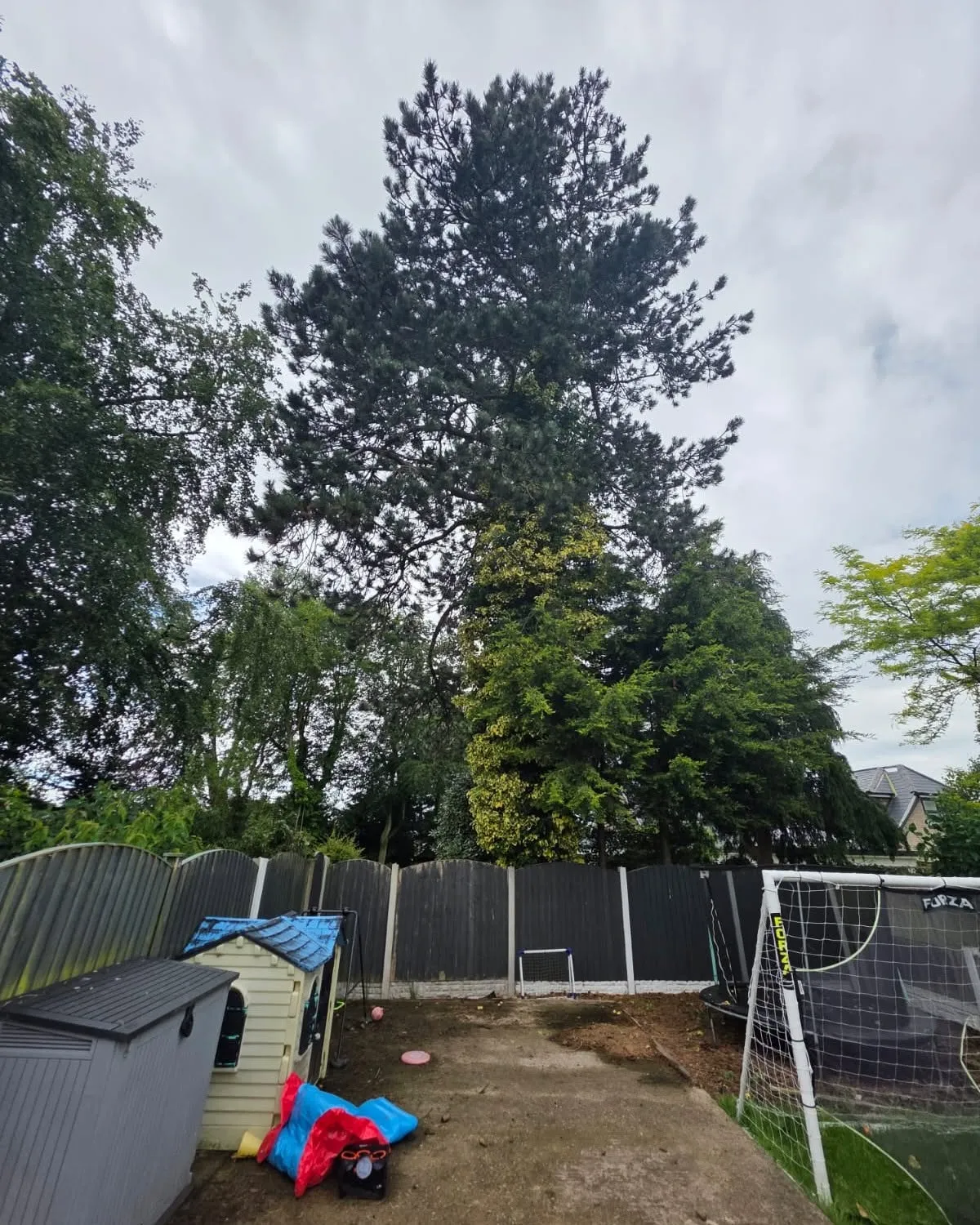
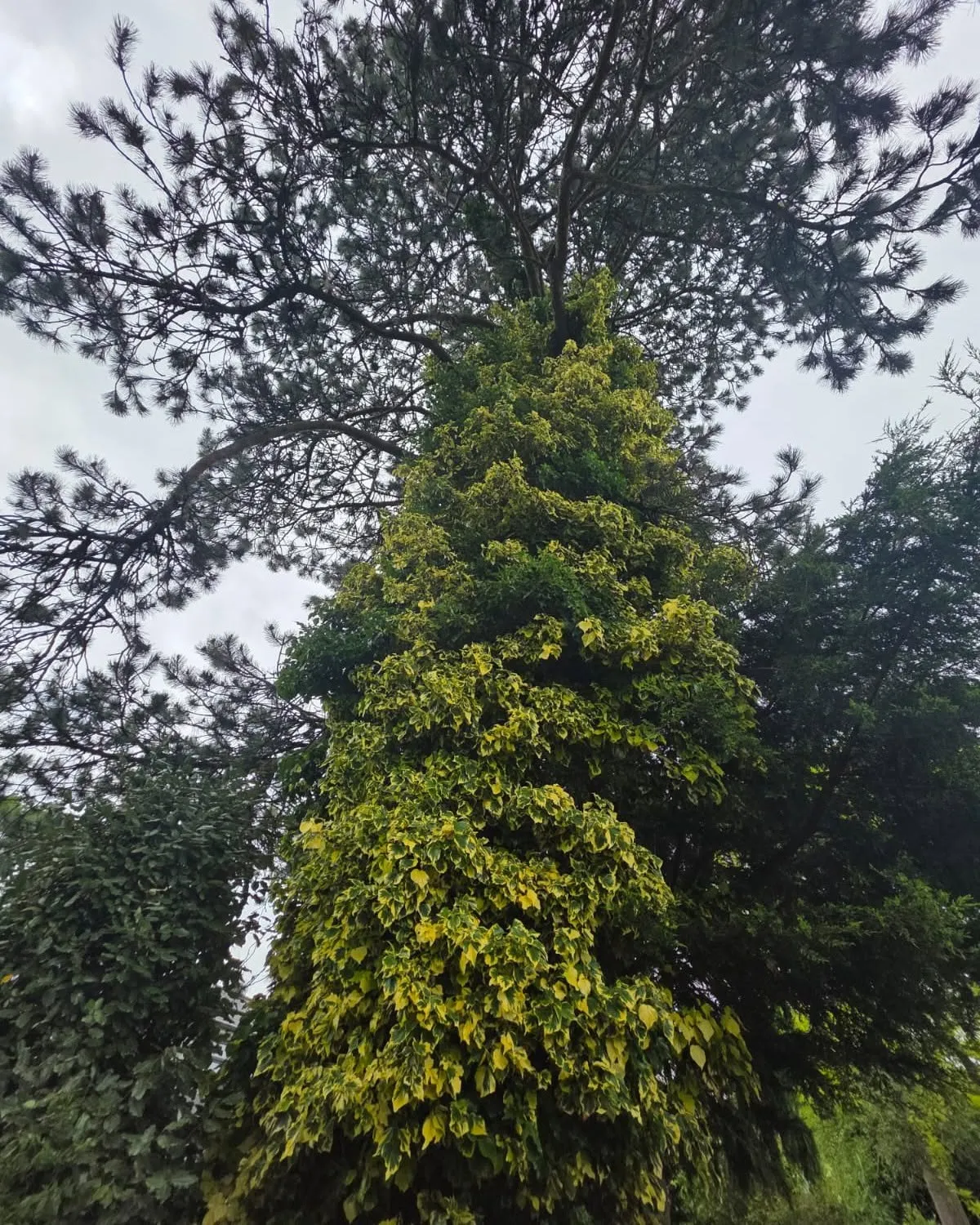
Sometimes we’re called out for jobs that we know are emergencies before we even see the tree – this large pine tree removal in Longton, Lancashire, was one of them. The homeowner called us about a large, unstable pine tree that was infested with ivy. With a tree this size surrounded by neighbouring properties, the risk of it coming down suddenly and causing serious injury was too high. We knew this was an emergency tree removal and pushed it to the top of our priority list.
The Challenge
On investigation, we found that this was not a standard garden tree – it was a substantial, mature pine that towered above the surroundings. With such a height, the tree was at risk of falling onto the house, causing property damage and potentially serious injury if it collapsed in a natural, uncontrolled fall. It had also been colonised by climbing ivy across much of its lower trunk, adding further weight to an already heavy tree with a failing root system.
An unstable root plate is one of the most serious structural failures on a tree. Unlike damage higher up in the canopy, root plate failure means the entire tree is at risk of toppling from the base. In an open rural area, this may not have been a problem, but in a residential garden in Longton with several nearby properties and a household with young children regularly using the garden, the tree needed to be removed safely and quickly before it fell.
Our Approach
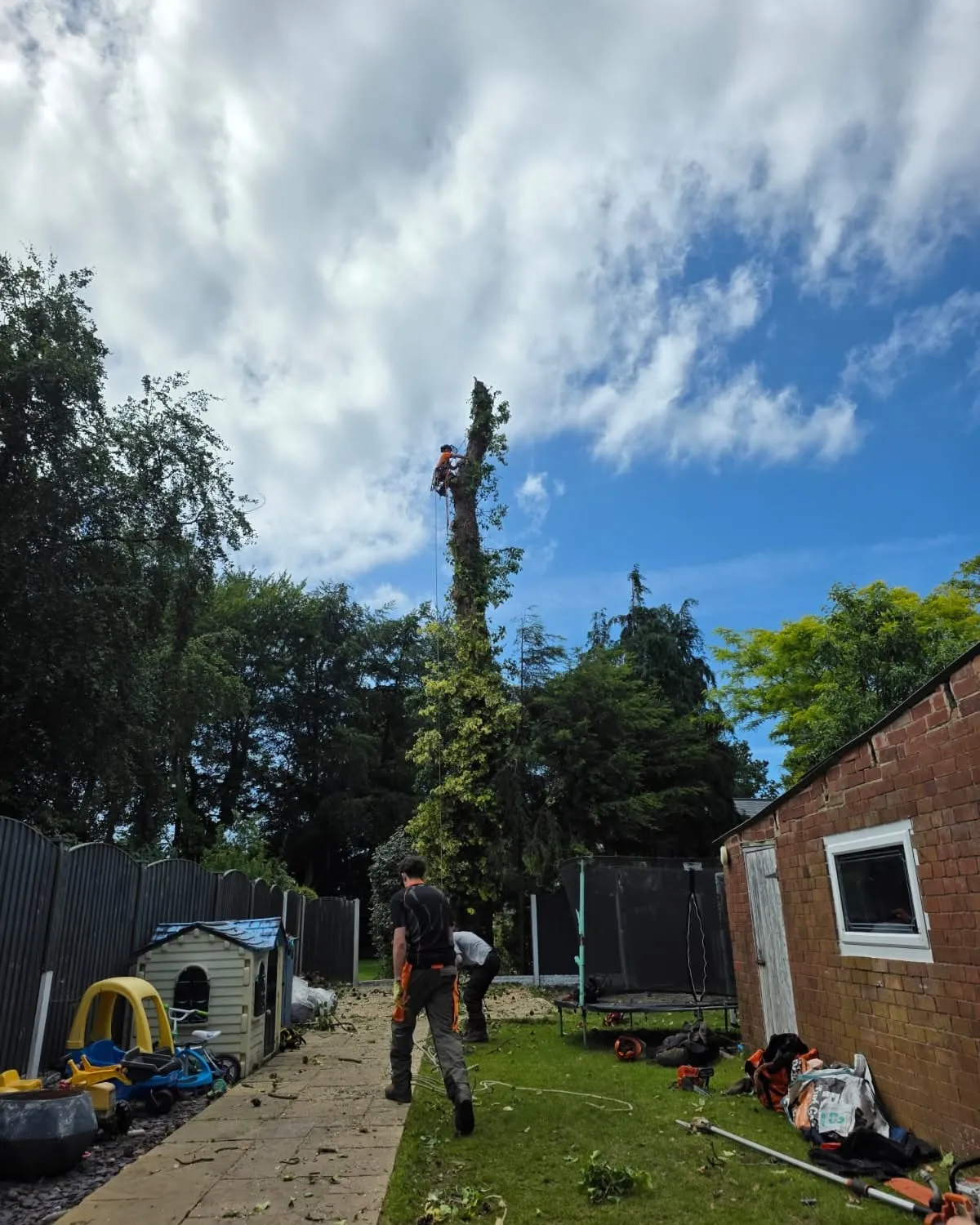
Given the proximity to the house and surrounding structures, felling the whole tree from the base was an unnecessary risk. A pine of this size falling uncontrolled could have caused severe damage to the property, not to mention the risk of injury to anyone inside. The only option under these circumstances was to use sectional dismantling, a method that involves a trained climber going up the tree to work from the top down, removing the tree piece by piece and lowering each section to the ground safely.
Our team assessed the tree carefully before work began. Identifying the best route and ensuring our climber’s safety was the most important part, given the root plate instability. Using rigging, we ensured every section of tree could be carefully and safely lowered for our ground crew to direct timber away from the house and ensure we left minimal mess.
Work Carried Out
Working methodically from the crown downwards, our climber removed the upper canopy section by section.
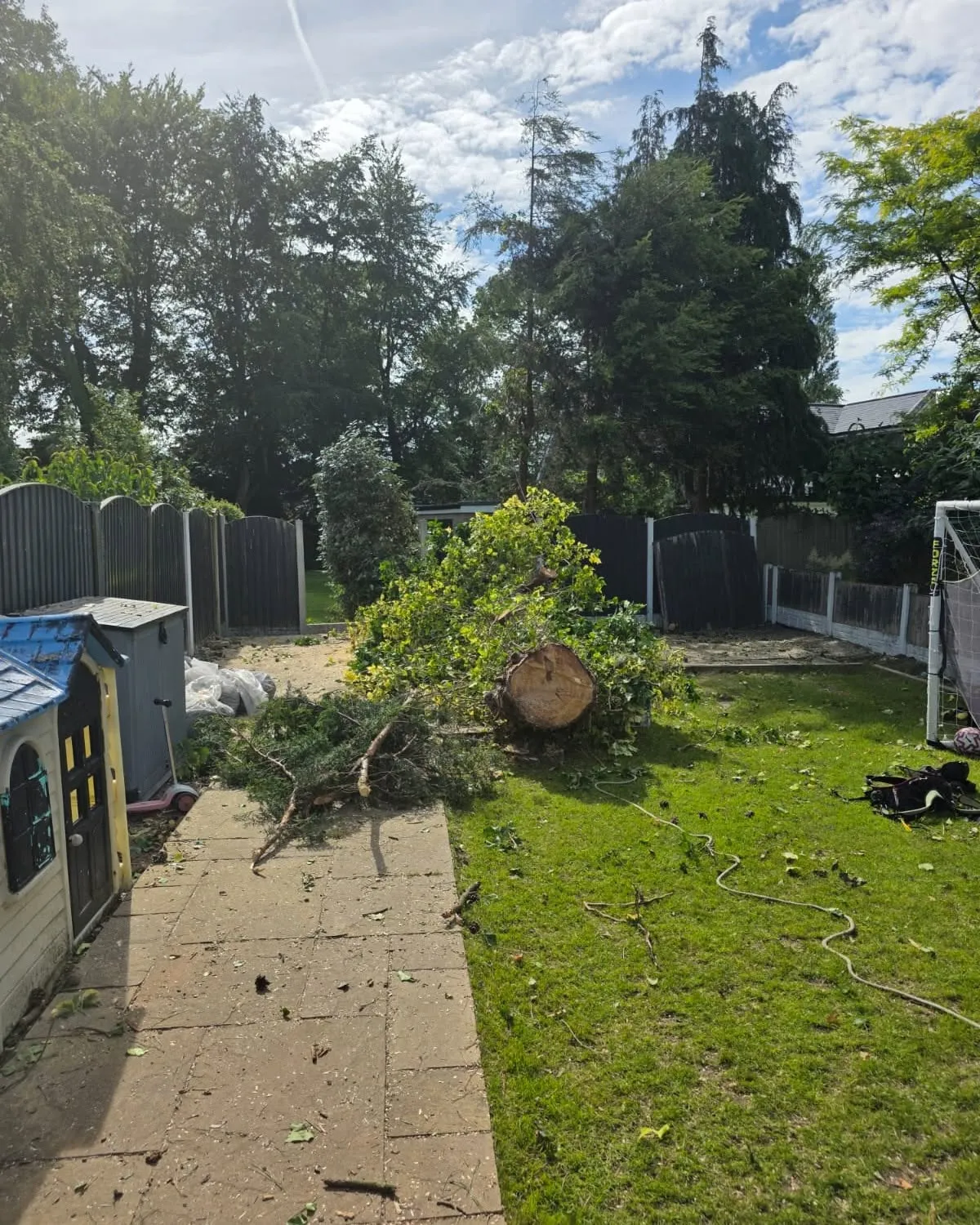
As each section of canopy was removed and processed on the ground, the true size of the trunk became apparent. The ivy covering the lower trunk was removed as part of the process, and all timber and debris was handled on site.
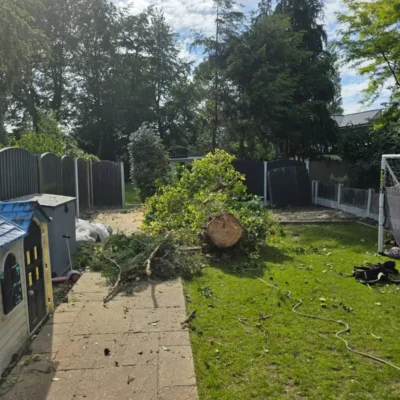
What had been a looming, unstable tree had been brought down safely and cleanly, with the garden left in good order. Most importantly, the garden was left clean and tidy, ensuring the family’s children were free to play outside safely once again.
Why This Was an Emergency Tree Removal
We’ve talked about an unstable root plate, but what does it mean and why is it particularly dangerous?
An unstable root plate is a broad term that refers to a situation where the root system is compromised. This can happen through disease, waterlogging, ground disturbances such as landslides, or age. When the root system fails, the tree loses the anchoring system that keeps it upright against its own weight and the force of wind. The whole tree is at risk of falling from the base. Root plate failure is particularly dangerous because it isn’t always obvious – a tree can look perfectly healthy from above ground whilst the root system below is unstable.
For a small tree in a rural area away from people and property, a root plate failure may not be an emergency. For a mature pine of this size, it meant there was a high risk of a tree weighing several tonnes suddenly falling onto houses and gardens.
Whilst many trees can be made safe through pruning or crown reduction, the only option in this case was to remove the entire tree to reduce the risk to people.
Signs of Dangerous Trees
Large trees in and around gardens provide shade, privacy, habitat, and character, but sometimes when a tree becomes too large it can pose a risk. A tree that was planted decades ago can easily outgrow the scale of its surroundings and needs regular professional care to ensure it remains stable and safe.
If you have a large tree in your garden and you’ve noticed any of the following signs of a dangerous tree, it’s better to seek a professional assessment.
Signs of a dangerous tree:
- Leaning
- Soil movement around the base
- Visible root damage
- Generally unhealthy appearance
- Dropping large branches
- Too large for its surroundings
A professional assessment by a qualified tree surgeon is the best way to ascertain risk from an unstable tree. In some cases, early intervention means we can salvage the tree. In cases like this one in Longton, we were able to remove the tree safely before it posed a risk to the homeowners.
Highfield Tree Care provides emergency tree removal and professional tree assessments throughout Longton, Preston, Leyland, Chorley, and the wider Lancashire area. Our NPTC-qualified team has over 14 years of experience handling complex residential and commercial tree work safely.
If you’re concerned about a tree near a residential property and think you need an emergency tree removal expert, get in touch with our team at Highfield Tree Care.